|
|
|
| Welcome to Turizm.net! |
CAPPADOCIA / PHOTOGRAPHIC TOUR
|
|
All photos by the Peter Kernett
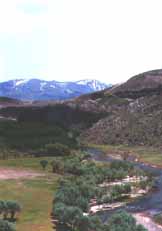
This view shows the small Melendiz River and the trail which runs the length of the valley. The thermal river brings a longer growing season then the region normally allows, and the volcanic earth is very fertile. Several villages subsist almost entirely on food grown here. 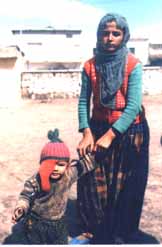
Cappadoccian children are inquisitive towards strangers. This young girl agreed to be photographed, but insisted her young brother was included. The only piece of clothing that was machine made were her plastic shoes. The boy wasn't wearing any.
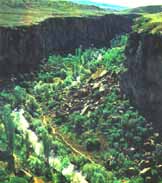
This is the view that awaits you as you approach the valley. This is Selime (Say-leem-ay). While the hiking here looks quick and easy, it soon becomes more challenging as you must ford the river at several points, and the canyon walls become much more vertical.
As you move deeper into the valley, you will begin to find hundreds of caves, dwellings and tunnels. You must bring lights, rope and climbing gear if you wish to safely explore hard-to-reach dwellings. Some vertical shafts are 150 feet down with shear smooth walls. Others are difficult to get into because earthquakes have destroyed the ground level entrance ways. You can spend over an hour just getting into one dwelling, and many more exploring it!
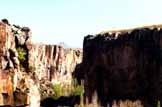
This view displays the sheer walls that make a rock climbers day. The best part is that probably no one has climbed the spot you will choose. Now add the excitement of exploring undiscovered tombs and ancient dwellings, and you have an adventure you can't buy in stores!
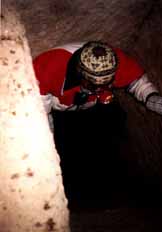
This shaft drops to over 125 feet. What's at the bottom? Nothing. But there were three other tunnels leading to this deep shaft at various levels under me. This was probably a well used within this underground city. The shaft probably descended down to the river level (200 feet) and supplied water to several levels of this multi-storied dwelling. I wonder what objects lie burred in the bottom, under 2 centuries of sediment. Who knows what was tossed down the well by wishful adults or playful children. The other side-tunnels led to hundreds of other rooms and tunnels. It took us 6 days just to explore this area!
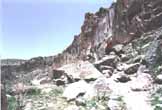
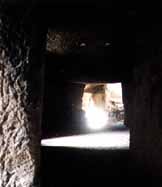
Windows cast light into this 300 foot high dwelling. My backpack lies in the shadow and my partner chews on beef jerky; a short rest before we began to explore this dwelling. Long after sunset, we climbed back up into this "apartment" and lined the walls with candles. The flames cast wonderful shadows that danced with the wind. Ancient burn marks on the walls made us realize how the 8h century occupants must have felt watching similar shadows. Notice the chisel marks on the soft walls. Miles of tunnels were made with the same tools. In the morning we will begin exploring a nearly silted tunnel leading into the canyon cliffs. We sit around at night and openly wonder what we might find!
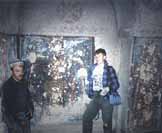
Pay dirt! We discover two wonderful churches carved into the rock. One look at the dirt on our clothes reveal the amount of crawling to get here! The red cross painted near the ceiling was probably painted in the 6th century, while the elaborate frescoes were added in the 7-8th. The defacing seen on the paintings were not the work of vandals but of 8-9th century Orthodox Christians during the Iconoclastic period. Over 100 years of defacing swept over the entire Byzantine Empire, and down into Ihlara. The fact that these paintings remain in this perfectly preserved state demonstrate two things. The Christians probably fled the area soon after these paintings where defaced, never to return (or at least they didn't repaint the frescoes when the Iconoclastic period ended), and they prove that modern people have not yet discovered these deep rooms, for no graffiti, trash or other vandalism was found. Remarkable. |
|
Home |
Turkey I
Cities & Sites
I Hotels I
Blue Cruise
I Tours I
Contact Us |
Search I
Ask for a quote to compare:
Cruises I
Biblical Tours I
Incentive Travel I
Hotels I
Transfers
Copyright © 1995-2016 Turizm.net
All rights reserved.