
|
|
|
| Welcome to Turizm.net! |
VEGETABLES AND PULSESThe mild climate of Turkey is suitable
to grow very different kinds of fruits and These market places are so attractive that you can not just pass by without buying an item. Vegetables are never treated as second class. in the Turkish cuisine. They may be sauteed or fried, like sauteed spinach; cooked in olive oil, like green beans in olive oil or cooked with meat, poultry, pastirma or sucuk (both spicy charcuterie) to be served as main course. They are also used lavishly in salads, boreks, mezes and soups. Among all vegetables, eggplants have a special place. They are cooked in nearly fourty different ways. They are fried, stuffed, baked, charcoaled and used in boreks, jams pilafs, kebaps. Most popular examples are; karruyank; baked aubergine stuffed with minced meat, tomato, parsley and onion, imam bayildi; cooked in olive oil stuffed with onion and tomato, salad made of charcoaled aubergine, with a smoky odor and taste. Green vegetables like spinach, chard, purslane are not accessories served with meat as in foreign cuisines, they are cooked with onion and tomato with a little water, served with yoghurt or cooked with a little fat to which eggs may be added if desired. Besides vegetables, pulses are mainly consumed in winter.In summer fresh and green pulses are widely used. White beans either with pastirma, sucuk or meat is the favorite and served with plentiful of rice pilaf and mixed pickled vegetables and generally onion.
|
||
|
|
|
Home |
Turkey I
Cities & Sites
I Hotels I
Blue Cruise
I Tours I
Contact Us |
Search I
Ask for a quote to compare:
Cruises I
Biblical Tours I
Incentive Travel I
Hotels I
Transfers
Copyright � 1995-2016 Turizm.net
All rights reserved.
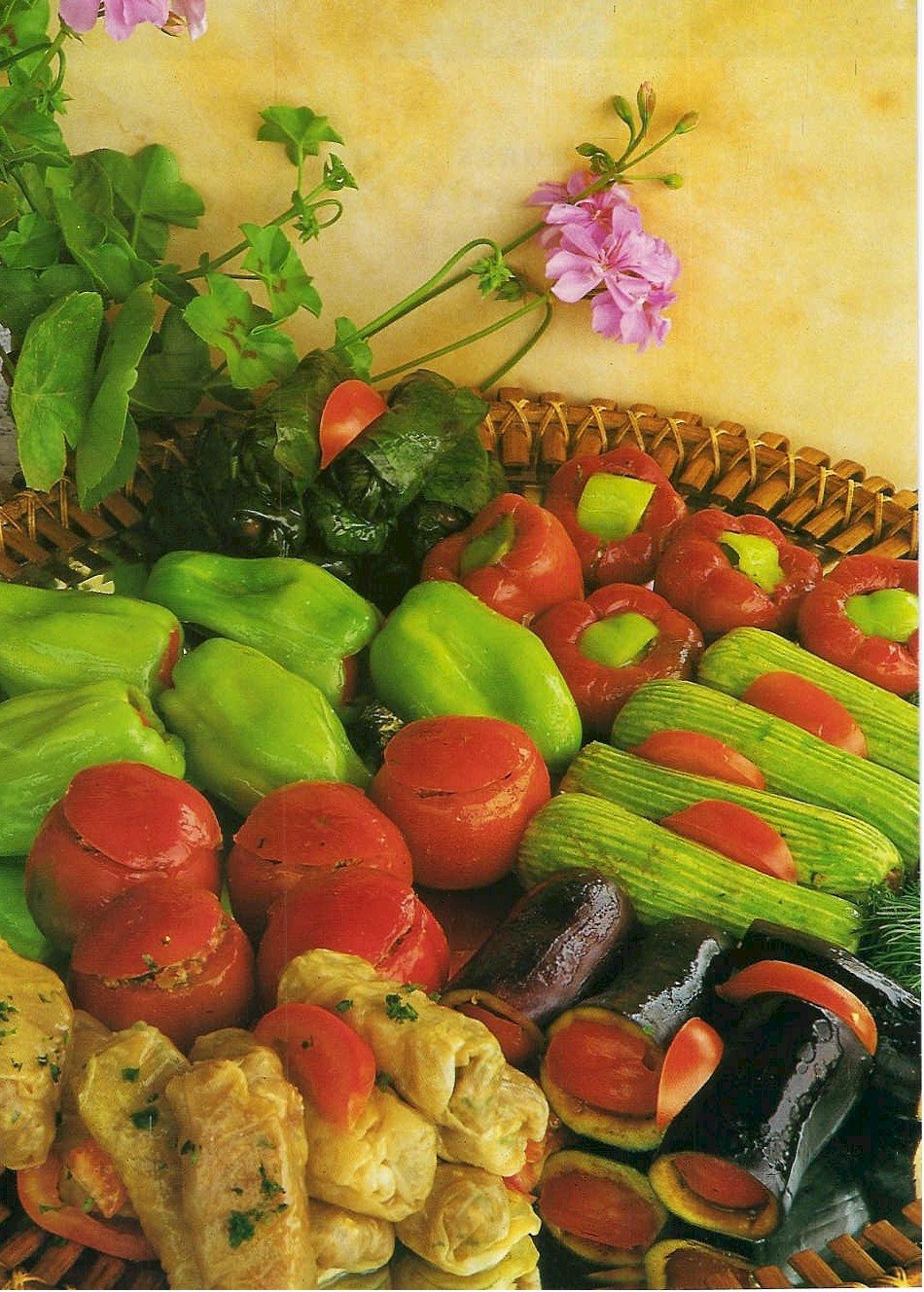 vegetables which are presented in colorful and cheerful market places arranged
neatly in rows together with herbs, pulses and spices.
vegetables which are presented in colorful and cheerful market places arranged
neatly in rows together with herbs, pulses and spices.