
|
|
|
| Welcome to Turizm.net! |
SOUPS
Soups are nourishig, natural and varied in Turkey. Tarhana soup is made of a savoury dough made and dried in summer which is cooked with tomato paste and water. Prepared in advance and cooked months later, tarhana may be the ancestor of modem instant soups. Spicy and pungent hot yoghurt soup brings the scent of valleys into houses as its Turkish name suggests. Lentil soup and chicken soup are cooked by every housewife. Fish soup prepared in coastal regions adds different tastes to Turkish cuisine. Beef's tribe soup is a help to imbibed stomachs after a long night of drinking raki; wedding soup made of mutton neck is served on wedding feasts. These two soups are the authentic examples of Turkish soups. There are four different types of
cooking soups: consomes with vermicelli, The only exception to hot soups is cacik served cool or cold in the summer. Cacik is not a starter but a cooler to be eaten with the main course and pilaf. Long winters are best endured with the help of yogurt soup and meatballs flavored with aromatic herbs found in the mountains, and endless servings of tea. The importance of food has been also evident in the structure of the Ottoman military elite, the Janissaries. The commanders of the main divisions were known as the Soupmen, other high ranking officers were the Chief Cook, Scullion, Baker, and Pancake Maker, though their function had little to do with these titles
|
||
|
|
|
Home |
Turkey I
Cities & Sites
I Hotels I
Blue Cruise
I Tours I
Contact Us |
Search I
Ask for a quote to compare:
Cruises I
Biblical Tours I
Incentive Travel I
Hotels I
Transfers
Copyright � 1995-2016 Turizm.net
All rights reserved.
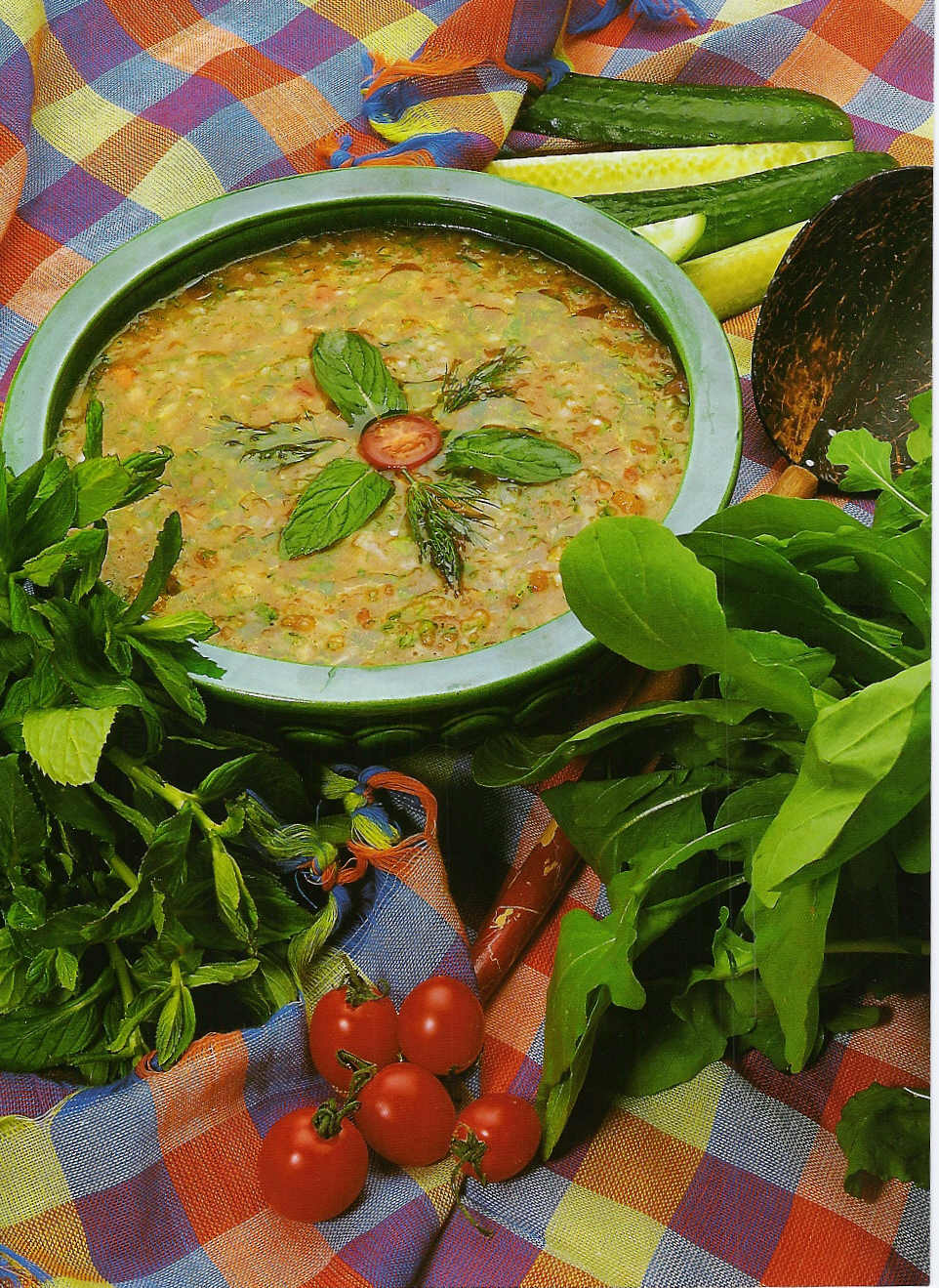 Soups have traditional importance and
are generally served as the first course. Eaten on every meal including
breakfast, they are warm and misty, to help us in cold winter days.
Soups have traditional importance and
are generally served as the first course. Eaten on every meal including
breakfast, they are warm and misty, to help us in cold winter days. vegetables, rice and meat like chicken
vermicelli; vegetable pastes with butter and flour raux like tomato soup; with
yoghurt like green bean soup; cultured with lemon juice and eggs like cultured
chicken soup.
vegetables, rice and meat like chicken
vermicelli; vegetable pastes with butter and flour raux like tomato soup; with
yoghurt like green bean soup; cultured with lemon juice and eggs like cultured
chicken soup.