
|
|
|
| Welcome to Turizm.net! |
PILAFS
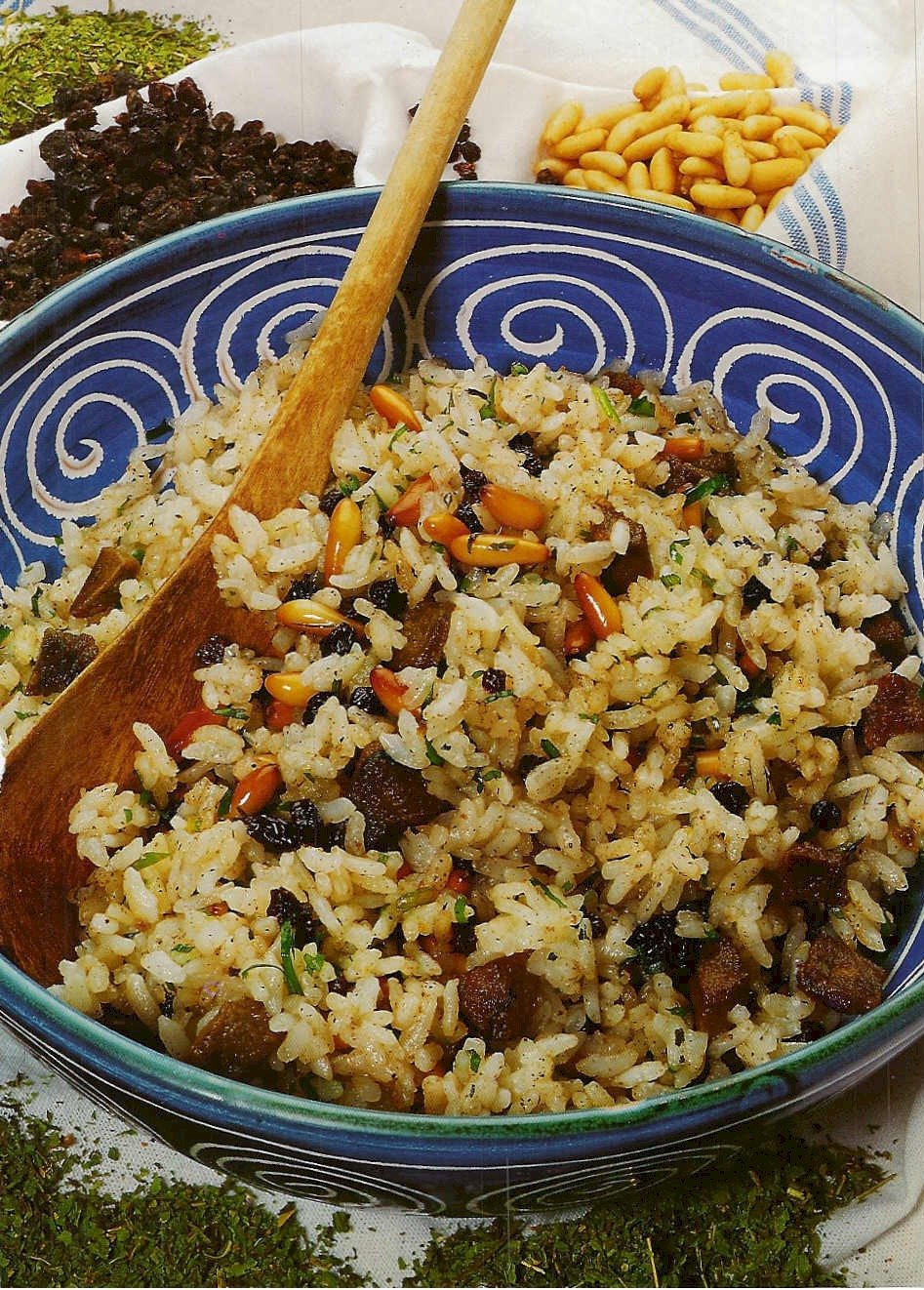
Custom was to eat pilaf just before the dessert to clean the palate, accompanied by hosaf-compote of dried fruits, by the Ottomans, whereas it turned out to be eaten as a side dish served with meat or vegetable dishes or pulses nowadays. Pilafs have possessed an essential part in the kitchens of the Palace and the populace, possible to be eaten both at lunch and at dinner. Rice pilaf with chicken and chick pea is so common that it is sold by street vendors. Schools present pilaf to graduates at commemoration days which are named "pilaf days". Turkish cuisine gives the same importance to pilaf as Western cuisines give to potatoes. The basic ingredient in pilafs are either rice, bulgur (boiled and cracked wheat) or vermicelli. There are varieties of pilafs cooked by adding onion, tomato, vegetables, nuts, herbs, poultry, or meat or combinations of these but generally cooked plain, namely with butter, water and salt. Rice pilaf is the most common variety.
Cooking this pilaf suitably (a good pilaf is
|
||
|
|
|
Home |
Turkey I
Cities & Sites
I Hotels I
Blue Cruise
I Tours I
Contact Us |
Search I
Ask for a quote to compare:
Cruises I
Biblical Tours I
Incentive Travel I
Hotels I
Transfers
Copyright � 1995-2016 Turizm.net
All rights reserved.
 Rice has spread out of China to other
cultures, and to the Turkish culture.
Rice has spread out of China to other
cultures, and to the Turkish culture. white, unsticky, scenty and
odorful) is a measure of ability in cooking for the housewives. After pilaf is
simmered, it is covered with a cotton cloth to absorb excess humidity. Pilafs
are preferably made of long grain rice and shorter types reserved to be used in
soups, stuffings and meatballs. Rural areas and Southeastern Anatolia prefer
bulgur as it is easier to obtain and cheaper. Bulgur pilaf is cooked with
onions and tomatoes and is eaten with yoghurt.
white, unsticky, scenty and
odorful) is a measure of ability in cooking for the housewives. After pilaf is
simmered, it is covered with a cotton cloth to absorb excess humidity. Pilafs
are preferably made of long grain rice and shorter types reserved to be used in
soups, stuffings and meatballs. Rural areas and Southeastern Anatolia prefer
bulgur as it is easier to obtain and cheaper. Bulgur pilaf is cooked with
onions and tomatoes and is eaten with yoghurt.